Earliest availability 02 Mar
Dr Matthew Hind
Respiratory Physician
Specialist expertise: Breathlessness, Cough, Respiratory Infections, Sleep, Snoring, COPD, Respiratory Failure, Lung Health.
BiPAP therapy helps regulate breathing during sleep by delivering gentle air pressure through a mask. It’s used when the body struggles to efficiently remove carbon dioxide, helping to improve sleep quality while reducing strain on the lungs and heart.

02036532006
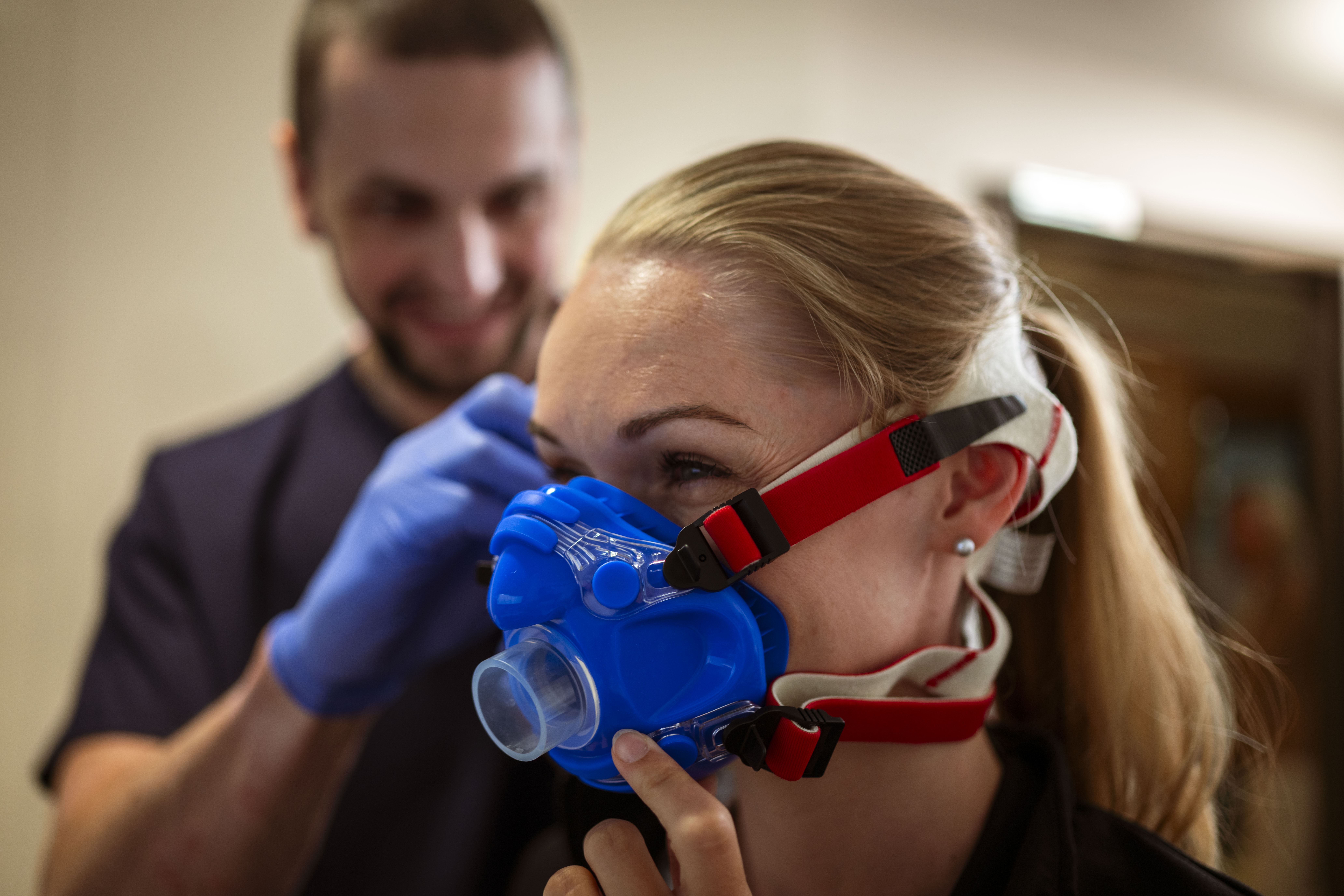
BiPAP (bilevel positive airway pressure) is a form of non-invasive ventilation. It supports breathing by delivering pressurised air through a mask worn over the nose, or nose and mouth, while you sleep.
Unlike continuous positive airway pressure (CPAP), which delivers air at one constant pressure, BiPAP uses 2 different pressure levels:
This difference in pressure makes BiPAP easier to tolerate for some people and more effective for certain breathing conditions.
BiPAP is most often used when the body doesn’t remove carbon dioxide properly during sleep. This is known as nocturnal hypoventilation. When carbon dioxide builds up, it can disrupt sleep, reduce oxygen levels, and place extra stress on the heart, lungs, and brain.
Conditions where BiPAP may be recommended include:
To determine if BiPAP is suitable for you, you’ll usually need to undergo overnight carbon dioxide monitoring, most commonly with a TOSCA sleep study carried out at your home.
This test measures oxygen levels, carbon dioxide levels, breathing patterns, and heart rate while you sleep. It allows your consultant to identify whether your body is retaining too much carbon dioxide and whether BiPAP is the most appropriate treatment.
At Welbeck, your care will be coordinated by our specialist respiratory and sleep consultants within our Lung Health centre. You’ll have rapid access to assessment and at-home machine setup, with ongoing support that focuses on improving your breathing, sleep quality, and wellbeing.
Before BiPAP is prescribed, you’ll have a consultation with a Welbeck respiratory or sleep consultant. This appointment focuses on understanding your symptoms, sleep quality, breathing patterns, and overall health.
Diagnosis is usually based on an overnight carbon dioxide monitoring sleep study, known as a TOSCA study, carried out at your home. This test measures carbon dioxide and oxygen levels while you sleep, and helps confirm whether hypoventilation is present.
Your consultant will review:
Once BiPAP has been prescribed, our specialist provider will arrange delivery and setup of the BiPAP machine and mask.
The equipment includes:
During the setup visit, you’ll be shown how to:
Once the machine is set up and you understand how to use it, you’ll use BiPAP each night while sleeping. The machine supports each breath, helping maintain stable oxygen levels and preventing carbon dioxide buildup overnight.
Follow-up appointments will be arranged with your consultant to review your symptoms and adjust the machine settings if needed.
BiPAP is a well-established and safe treatment. Most side effects are mild and manageable, and your team will support you through any adjustments.
Possible side effects include:
Rarely, some people may feel claustrophobic or anxious when first using the mask. Your team will be able to support you with this, and mask adjustments, and gradual acclimatisation usually help.
Serious complications of BiPAP are extremely rare.
Before you can start BiPAP therapy, you’ll need to have an assessment with one of our respiratory and sleep consultants, and usually a TOSCA sleep study.
On the day of your home setup:
If you have concerns about comfort, anxiety, or mask fit, you can talk to your consultant beforehand or the team on the day of setup.
When you start BiPAP, there’s usually an adjustment period as you get used to sleeping with the machine.
In the first few nights, it’s normal to notice the mask or the sensation of airflow. This usually improves as your body adapts. Many people report better sleep quality, improved alertness, and fewer morning symptoms within days.
At Welbeck, you’ll have follow-up appointments with your consultant to:
If you experience new symptoms, discomfort, or problems with the equipment, our team is available to help resolve these promptly.
You can continue normal daily activities, including work and exercise, unless advised otherwise. BiPAP is intended for long-term use, and consistency is key to gaining full benefit.
The self-pay cost for private BiPAP therapy at Welbeck is £4,550.
This includes the machine, all equipment, including a mask, and the coordination of a home setup. Please contact the Lung Health centre for more pricing information.
At Welbeck, our respiratory and sleep consultants are experts in their field and are dedicated to providing world-class care to every patient.
With access to colleagues across other specialties, our consultants are also able to refer within the Welbeck ecosystem if required to ensure you receive the treatment you need as quickly as possible, all under one roof.
All appointments, testing, treatment, and follow-up appointments take place within our state-of-the-art facilities, enabling us to deliver accurate diagnostics and advanced treatments.
To book an assessment for BiPAP therapy, you must be referred by either your GP or a specialist following a consultation with them. Self-referrals are not accepted for this treatment.
If you’d like to schedule a consultation with a respiratory or sleep specialist, please get in touch to make an appointment. Your health is important to us, so we strive to offer same-day appointments whenever possible.
Our consultants are recognised by the major health insurance companies. If you have private health insurance, your treatment at Welbeck can begin once you have obtained authorisation. We also provide care to self-paying patients. Learn more about the different payment options at Welbeck.
BiPAP is usually a long-term treatment. Most people need to use it every night to manage their condition and keep carbon dioxide levels stable during sleep. Your consultant will review your progress and adjust treatment as needed over time.
Yes. Most BiPAP machines are portable and suitable for travel, including overnight stays and travel abroad. Your provider can advise on power options, battery use, and airline requirements, as well as how to pack and transport your equipment safely.
It’s common to need time to adjust to BiPAP, especially in the early weeks. Your consultant can review comfort, mask fit, and settings to help make it easier. With the right support, most people go on to use BiPAP confidently and see clear improvements in sleep and breathing. If BiPAP isn’t right for you, stopping and exploring other management options can be discussed together with your consultant.
BiPAP machines are designed to be very quiet. Most people describe the sound as a gentle background hum that doesn’t disturb sleep.
Currently selected day
Available consultations