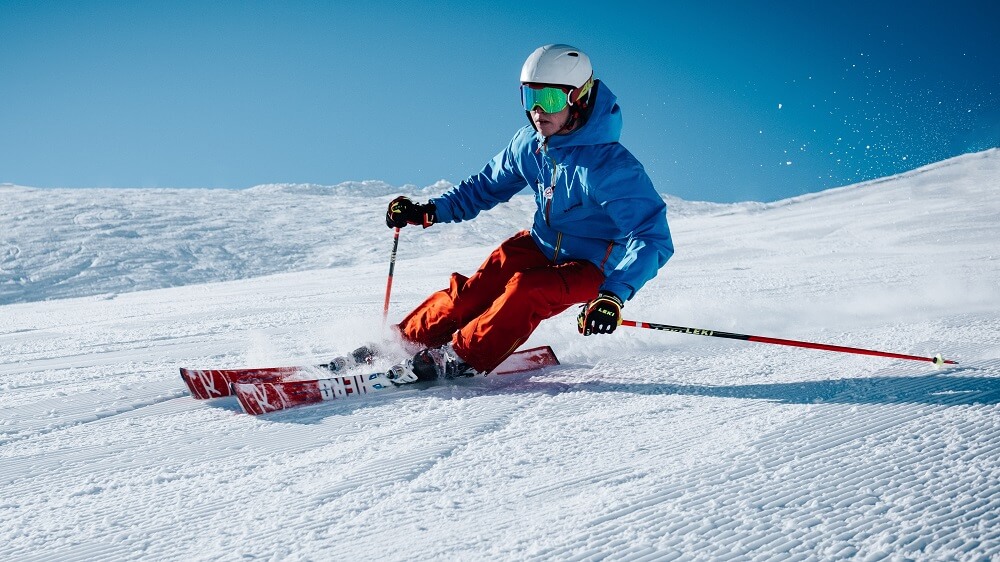
ACL injuries are very common and are unfortunately becoming more so.
Among women, skiing is the most common cause of ACL injuries.
While an ACL injury is categorised as a serious injury, with significant pain and swelling, the initial treatment is rest, ice, compression and elevation (RICE). If you’ve had a fall on the slopes and injured your knee, it is important to have a clear diagnosis of the injury.
You should see a knee specialist and often an MRI scan will be requested to assess the state of the ACL and also to assess if there are any other injuries (such as a meniscal tear). It’s very common to have other associated injuries alongside an ACL injury.
A knee specialist would be able to advise on the best treatment plan for you, depending on your injury, age, level of activity, and future sporting ambitions. Not all patients require surgery and can get back to a normal lifestyle without surgery. Others, however, may require surgery. Most of the time, surgery is not urgent, and it’s often best to have a period of physiotherapy before surgery to get the best possible outcome.
If surgery is required, it’s important to see a surgeon who has extensive experience of ACL injuries so they can discuss the best individual plan for you to get you back to full function as soon as possible.
In general, they should be treated once you’ve arrived home. Operating on a swollen, stiff knee very soon after a knee injury often results in a poor outcome. In the first few days and weeks following an ACL injury, the priority is to reduce the swelling and increase the range of motion of the knee. Surgery can be safely performed weeks or even months after the initial injury.
The most important thing is to prepare for your skiing holiday so that you can avoid injury, enjoy yourself and have fun skiing!